Written by Paris Choi, CraftHER Scholar 2026
Clumsily pawing through curry, I watched the women seated before me transform their hands into perfect spoons, eating on their leaves effortlessly. Before me was food I had never tried before: jackfruits, unique curries with the perfect spicy kick, creamy salads. Each of the women had brought food to share, having travelled through torrential monsoon rains to join us. This was just one of many moments that reminded me of the selflessness and community driving these Indigenous women.
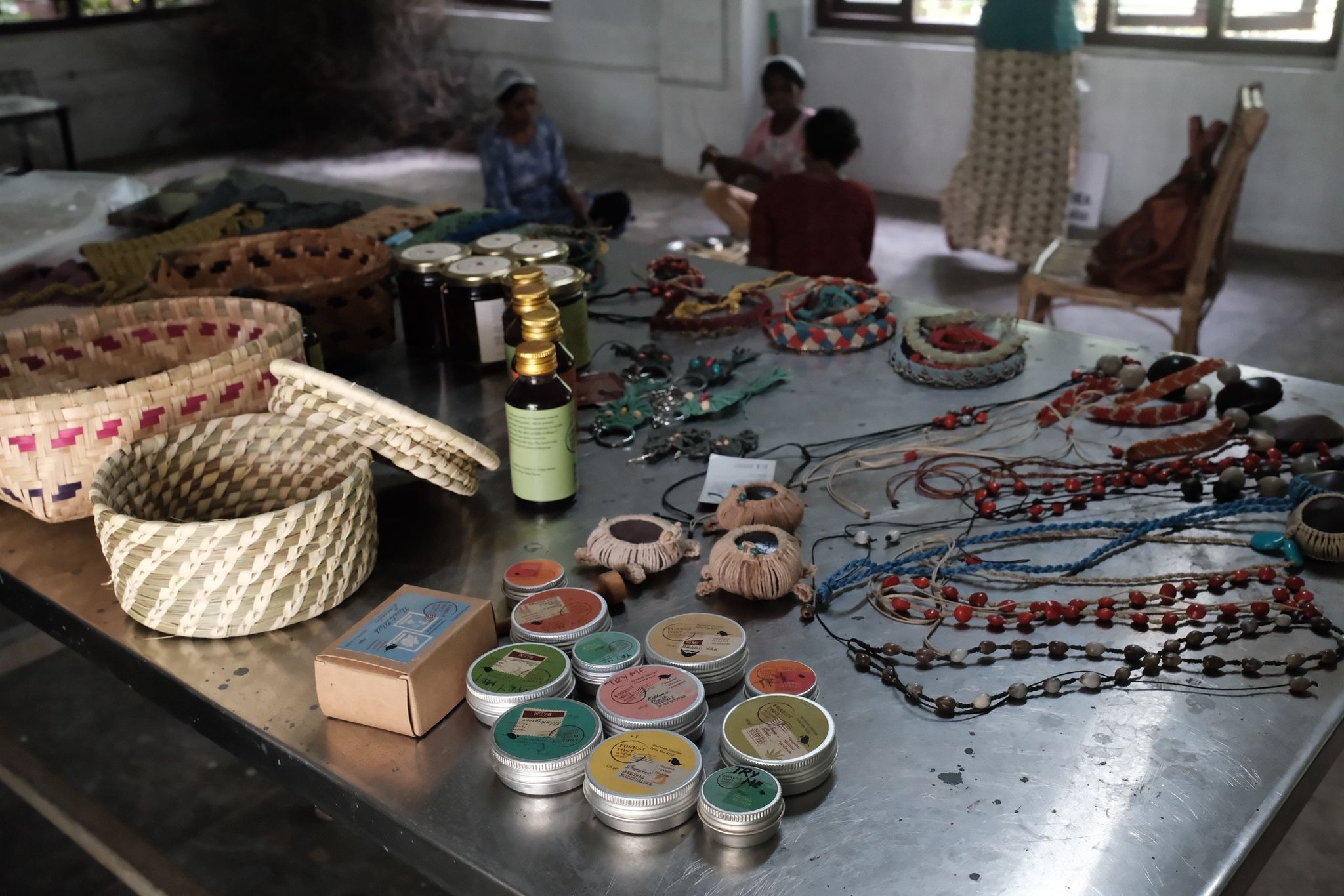
I was brought to a Forest Post production unit to gain an insight into the lives of the women that Forest Post supports, as well as their production process. At the unit, I was greeted by women from the Kaladdikav collective – forest dwelling women who produce crafted goods, soaps, oils, and balms. Through Forest Post, they earn a sustainable income and hone their skills, turning raw forest materials into high-quality products.
I had come expecting to learn about a process. I left having learned about the women behind it.
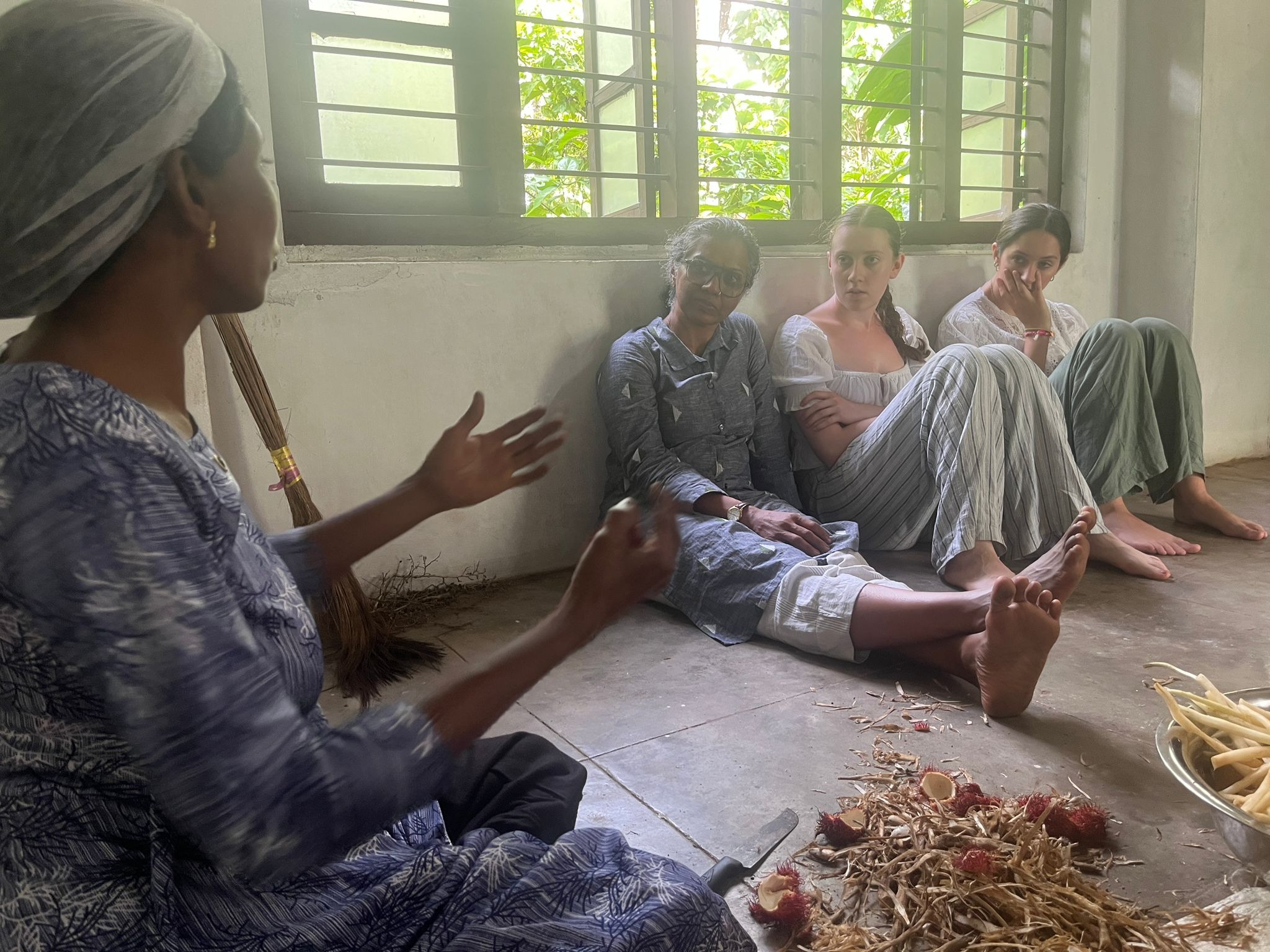
I met Chandrika as she was shaving away at shatavari roots. She told me, simply, that her life had not been easy, that she had known real loss. But she didn’t dwell there, and neither did the conversation. Within moments she was laughing again, telling me about her four children and the small luxuries she can now buy them through her work with Forest Post. The personal tragedy she shared is not how I remember Chandrika, nor is it how Chandrika defines herself. Throughout my time with her, I remember her smiles and glee at having people to talk to, since those at home are quieter than she’d like. All the while, even while recounting her story, Chandrika’s hands worked away effortlessly at the roots.
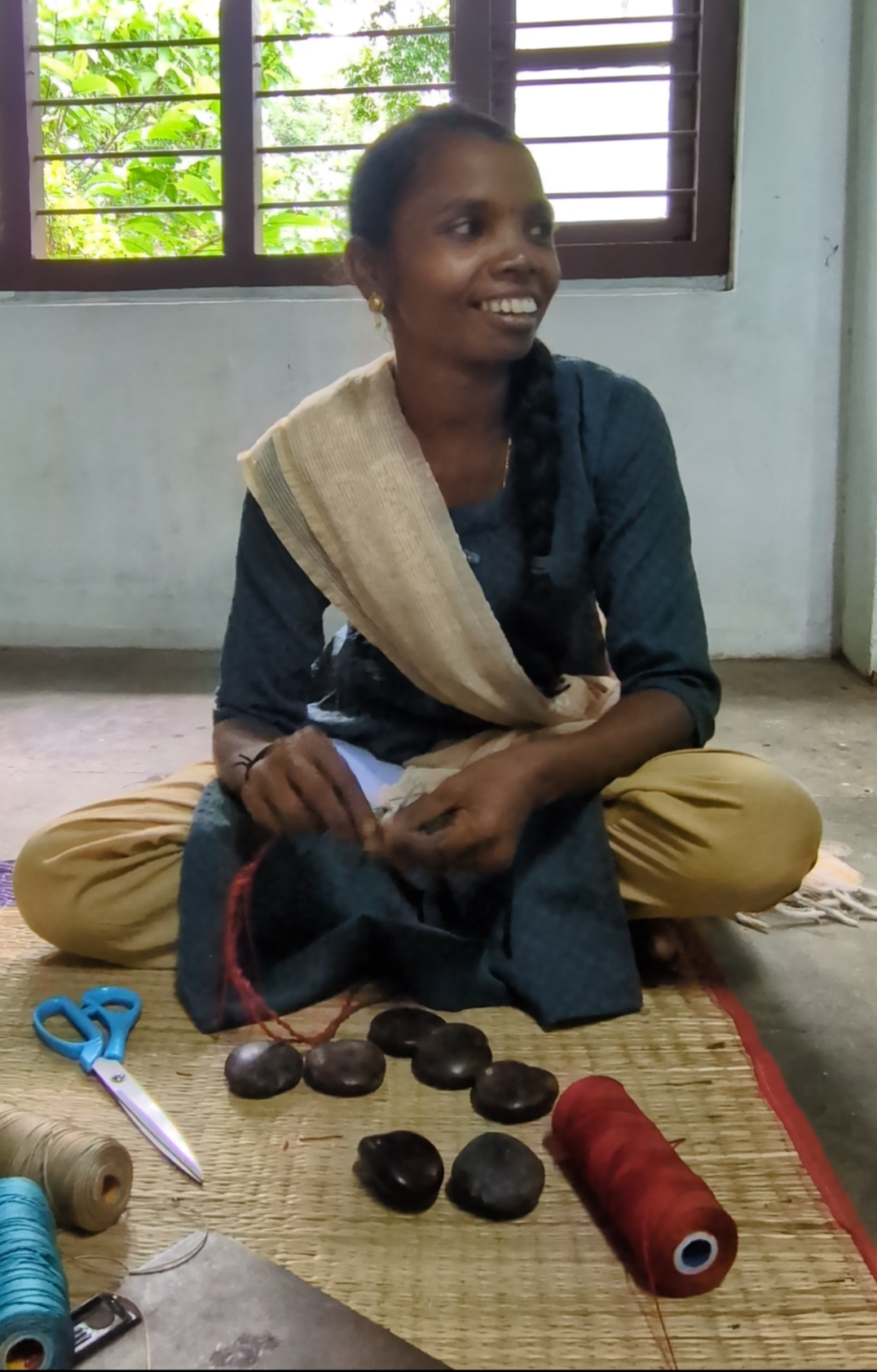
While weaving away tirelessly at macrame crochet, I also met Myia. Manju introduced her as one of the most talented weavers, who could spin three “spider” designs in one day (one of the most complex designs). I approached her as she was weaving a necklace, stretching the threads from the window. She recounted how Forest Post allowed her to provide a good life for her children, better than the one they had before with an additional income source. But, more than that, Myia shared the joy she derives from seeing people wearing her crocheted jewellery. She was taught by Manju and Mira, and works tirelessly at each necklace, each piece, with the seeds used in necklaces foraged locally by her husband. For her, each product is an extension of herself; an eternal reflection of her time, effort, and talent. The real joy of working for Forest Post has been seeing people wearing her craft, carrying a part of her with them.
These are only a couple of stories from my days with Forest Post. It would be an impossible task to capture the stories of all of the inspirational women I met over the last few days. Though, a detail that’s stayed with me is their relationship with technology. Every woman I met carried a smartphone; this wasn’t a community cut off from modern life, unaware of other ways of living. Their closeness to the land wasn’t a lack of options. It was a choice, made and remade daily, to stay rooted in something they valued more.
And this is the core of Forest Post. It is not to enforce change, but to protect a natural way of living that is sustainable at heart. Without enterprises like Forest Post, these communities face a changing market that values consumerism, trends and mass production at the behest of the environment. Yet no factory-produced necklace carries the same passion, the same story, the same life, as the goods made by these women. Production can be offshored to the machine, but the human soul can never be replaced.