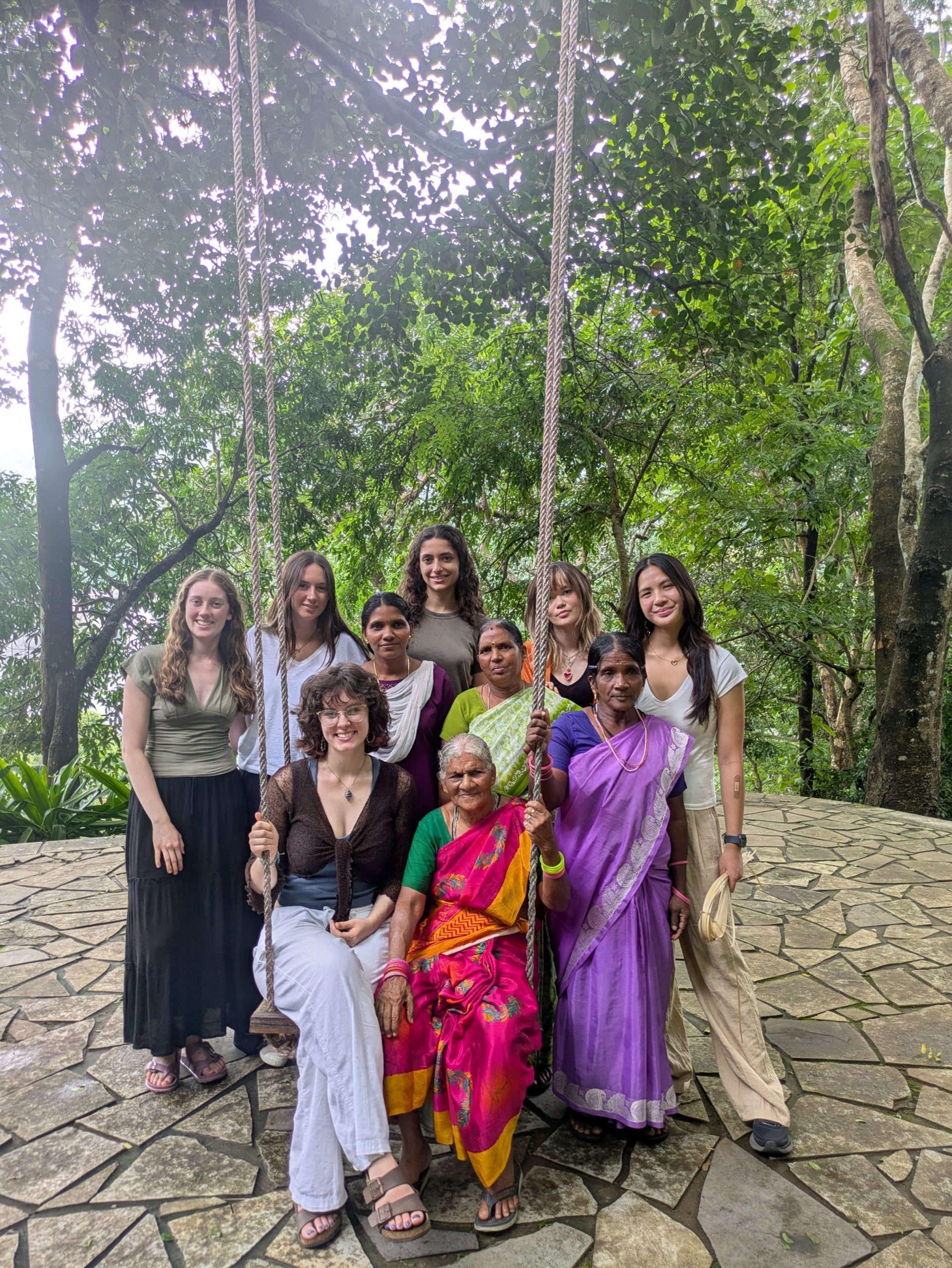
Written by Abi Vernon, CraftHER Scholar 2026
On our first day with Forest Post, we met many brave women. The workers and Manju form an incredible bond and to be welcomed so warmly into their circle within just minutes of meeting one another was truly heartwarming. To highlight a single story I heard over this week as the focus for this blog is impossible so, instead, I will amalgamate those which stood out most to me into a message I feel has been consistent throughout the week. Modern disruption of our harmony with nature is not only endangering the natural world and climate that we live in but also impacting people who depend on the forest, and have done so for generations.
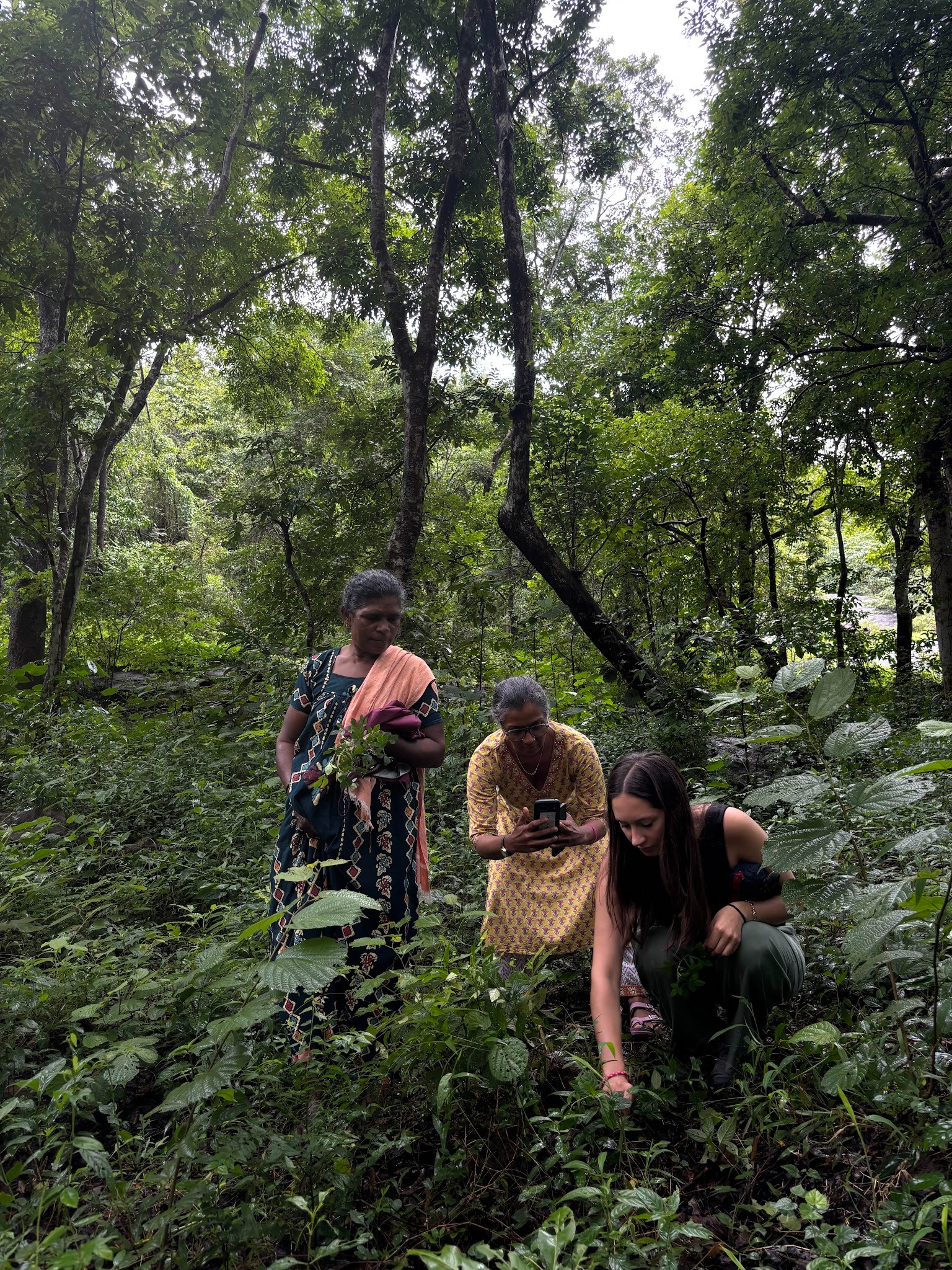
Following lunch on day one, a few of us had the privilege of speaking informally with Chandrika, a local woman from Anapantham. I think I can speak for us all when I say that to hear her stories and follow her life, existing so harmoniously with the natural world around her, was mesmerising. In particular, Chandrika told us about her encounter with a wild tiger. She was walking through the forest with her husband and came across a tiger laying by the side of the river. She emphasised that this tiger was HUGE; ‘not like the ones you see on TV, much, much bigger!’ Naturally, she was terrified and cried out for her husband to help. Her husband, however, approached the tiger cautiously and told it, ‘Do not fear, and do not attack us. We are not here to hurt you; only to pass through’.
Miraculously, the tiger paid them little attention and continued to bathe itself in the river. They were able to pass by and continue on their way through the forest not only unharmed, but also touched by the encounter that they had. By means of their lifestyle and complete immersion with the animals and plants of the forest, Chandrika and her husband had been able to form a harmonious relationship with the beings around them, whereby they could co-exist in peace.
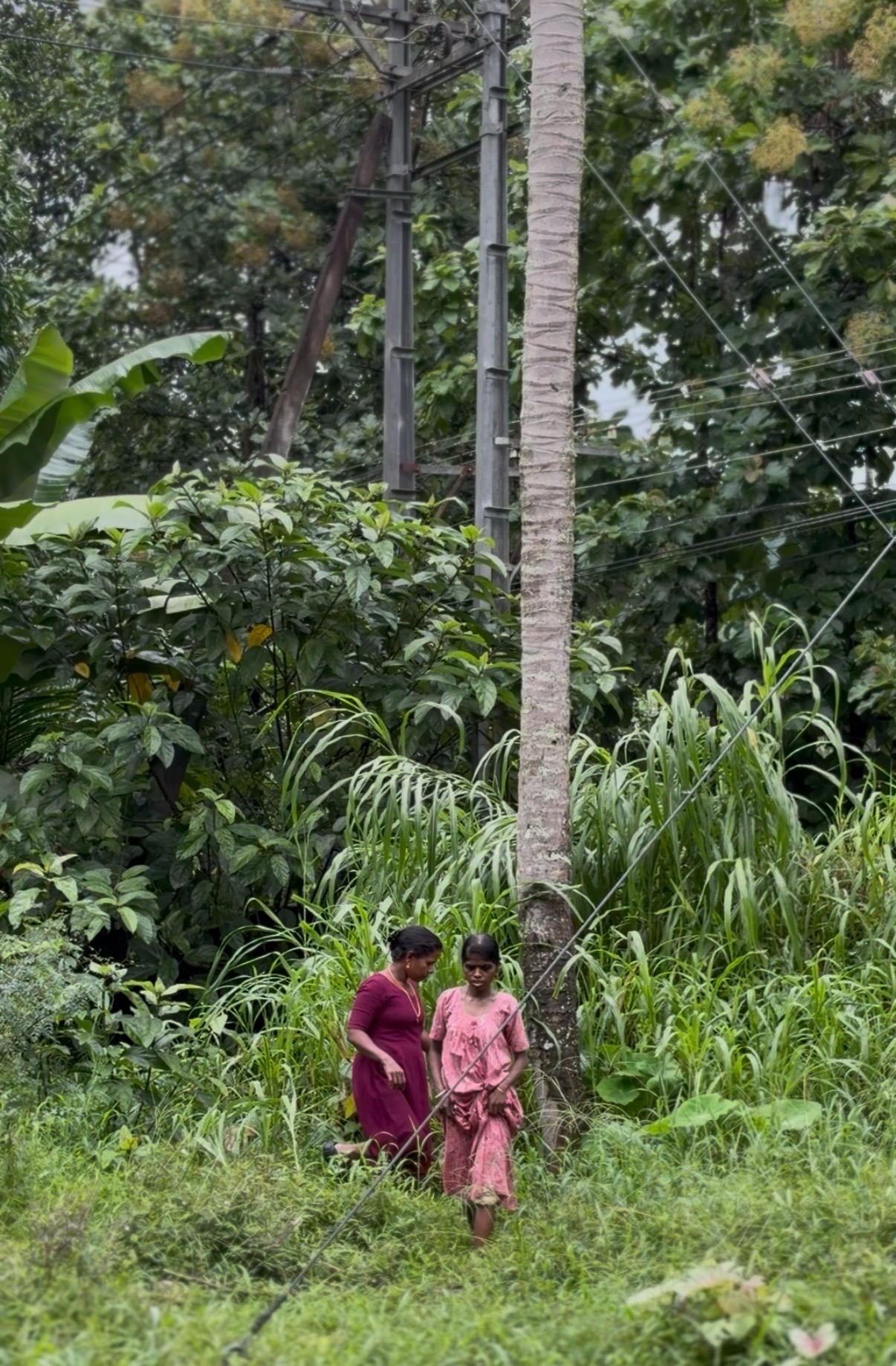
I think ‘wowwwwww’ was the collective response as Chandrika told her story; however this was soon deflated by the harsh reality that followed. Multiple other women chimed in and corrected our impression, telling us that the harmonious balance they once had with the forest is being destroyed by modern tourism and exploitation of the natural beauty they live within. Negative experiences with local animals, most notably elephants, are becoming increasingly common as the balance with nature becomes more disrupted. Tourism in local areas is resulting in increased aggression of the elephants, leading to more stampede events and, unfortunately, more deaths among the locals.
We heard about the deaths of the womens’ family members, fathers being taken away from them at the hands of the animals they once co-existed with so peacefully, and faced a very sobering reality. The short-term enjoyment tourists receive from safaris and excursions into the forests is having long-term impacts on those who remain behind when they return home.
The impact comes not only from tourism, but from any encounter where humans take the forest for granted and treat its inhabitants with little respect. Chandrika’s handling of her encounter with the tiger, with gentle caution and respect, should be taken as an example of how everyone should approach the forest. Unfortunately, others are neglecting to follow this and treating the animals poorly, making them resent humans. While the local villagers have nothing to do with the influx of visitors to the forest, the animals are unable to make this distinction and are retaliating aggressively to any humans they encounter, which unfortunately happens to be the locals.
Hearing these stories has only highlighted to me how fragile our relationship with nature is. It is a beautiful one, but so incredibly fragile and must be nurtured cautiously. It is heartbreaking to hear how the balance these women once had with the natural world around them is being destroyed, through no fault of their own. The people in these communities have made such an effort to co-exist with their surroundings through generations and this can be offset when people enter their environment and act irresponsibly.
Overall, throughout this week, the most transformative experience for me was being able to communicate with women so different from myself and not only learn their skills and crafts but also to absorb their wisdom and experiences, which are worlds apart from my own. To hear first-hand the impact that tourism has had on their way of life and the knock-on effects of an animal encounter so fleeting for a visitor has opened my mind and broadened my perspective on the topic. Going forward, I will be mindful when partaking in activities where I enter a local space and encourage those around me to do the same. Unlike us, these communities cannot simply leave when the forest becomes unsafe. The forest is their home, and they deserve to be able to live within it in peace.